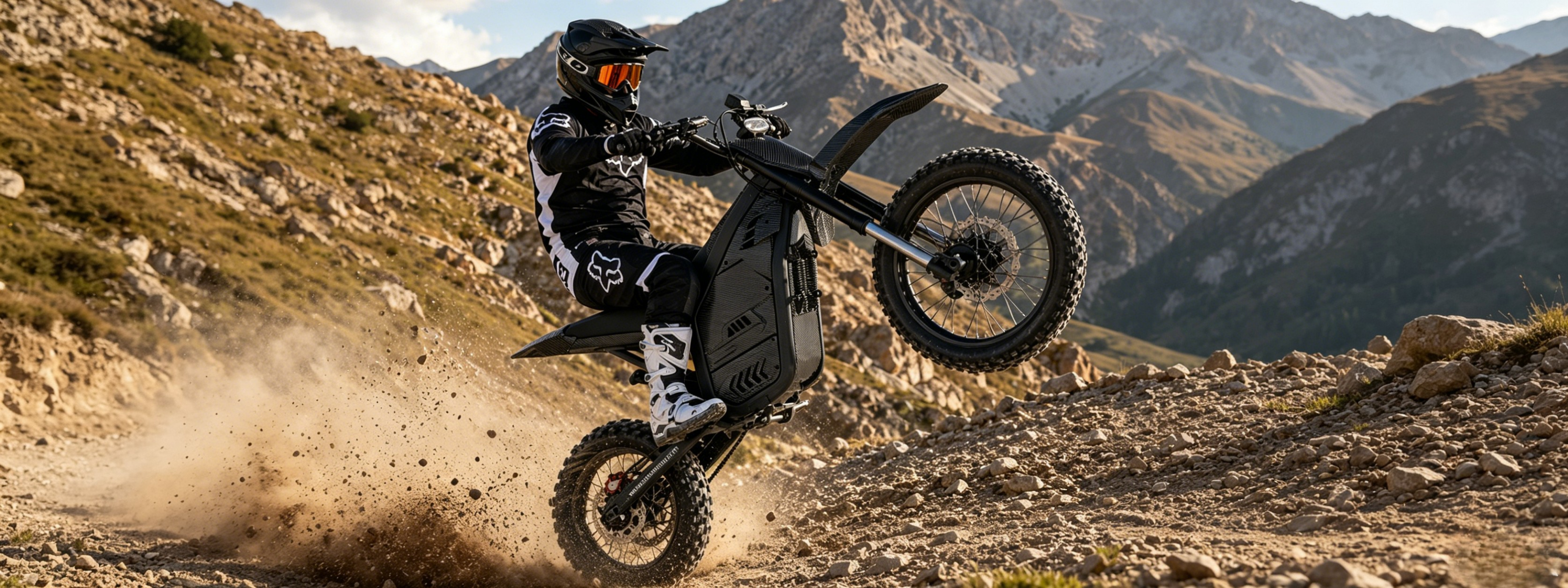
In the United States, more riders are asking a real question. Can a trail-riding electric bike with a 48V system handle true mountain-trail conditions? Or is it just for smooth, hard-packed paths?

Rough terrain is where the fun starts, and where weaknesses show fast. Rocks, roots, loose gravel, and rutted service roads stack up constant impacts. These impacts can drain your arms, legs, and battery.
So the answer isn’t a simple yes or no. Whether a 48v e-moto for rough terrain feels steady or sketchy depends on several things. These include the bike’s torque, its suspension, and how the rider sets it up for all-terrain riding.
This is where NovaGlow Moto aims to stand out. They offer a platform built for power, freedom, and cleaner travel. It’s an off-road electric motorcycle engineered to push past where ordinary 48V setups might hesitate.
In the sections ahead, we’ll break down the proof points that matter on real trails. We’ll look at a 48V 23Ah LFP battery, a 4000W mid-drive, 230N·m torque, and durability features. These can decide whether your ride ends with a grin or an early turn back.
What “Rough Terrain” Really Means for Trail-Riding Electric Bike Performance
On a map, “rough terrain” looks like a simple line. But on the trail, it's a world of rocks, roots, and gravel. These elements test your balance and timing.

Rough terrain also means lots of ups and downs. You might be climbing steeply one minute and braking hard the next. These changes are what make trail riding different from riding on paved paths.
- Uneven tread: embedded rock, wet roots, and sharp-edged gravel
- Elevation changes: short climbs, long descents, and off-camber sections
- Technical features: switchbacks, narrow lines, and small hits that demand precision
- Variable surfaces: mud, sand, snow, and loose dirt that can break traction fast
Many riders look for a bike that can handle everything. They want to ride bike paths, gravel roads, and trails. The best choice is often a singletrack e-bike that's easy to ride on green trails and can handle more as you get better.
“Rough” terrain requires specific qualities. You need a bike that handles well and stays comfortable over long distances. A high-torque electric trail bike is great for climbing. But for confident braking and control on descents, an all-terrain electric motorcycle is the way to go.
48V electric dirt bike, 4000W peak power e-motorcycle, High-torque e-moto
Trail riding can be tough when the ground is uneven. A 48V electric dirt bike stays steady on rough terrain. It's built for smooth power, not sudden jumps.
Having a high-torque e-moto mindset is key. It helps keep traction, balance, and keeps you moving on tough trails.

Why 48V Systems Are Popular for All-Terrain Riding
48V systems are perfect for off-road adventures. They offer enough power and efficiency for rough terrain. Energy use goes up fast due to the terrain and constant throttle changes.
Many riders start with a 48V 15Ah battery for mountain riding. It gives them extra power for steep trails. This means fewer stops and a smoother ride.
NovaGlow Moto’s Rough-Terrain Formula: 48V 23Ah LFP + 4000W Mid-Drive
NovaGlow Moto focuses on high-performance e-mobility. Their 48V 23Ah LFP battery and 4000w peak mid-drive motor offer strong performance. This is great for corners and technical lines.
The mid-drive motor keeps the bike balanced. It improves climbing efficiency compared to hub layouts. This makes the bike feel more stable on tight trails.
Torque and Climbing Confidence: 230N·m Strong Torque on Loose Surfaces
On dirt, gravel, mud, and sand, torque is more important than watts. It helps you climb steep areas smoothly without losing traction.
With 230n·m strong torque, you can climb steep grades without stalling. This steady power helps you roll through switchbacks smoothly. It keeps the bike moving forward, even on slippery surfaces.
- Loose gravel: smoother torque helps the rear tire hook up instead of skating.
- Soft sand: steady drive helps maintain momentum without digging in.
- Wet dirt: predictable pull supports balance when traction changes mid-climb.
Suspension and Traction: Why Full Suspension Matters on Rocks, Roots, and Gravel
Rocks and roots can quickly ruin a smooth ride. Full suspension off-road offers both front and rear support. This softens hits and keeps the bike steady. A 95mm adjustable suspension setup lets you fine-tune the bike for different terrains.
Better Ground Contact for Control on Loose Terrain
Suspension is key for more than just comfort. It helps tires stay in contact with the ground. This is vital on loose terrain like marbles, sand, or dusty corners.
Rugged off-road tires also enhance traction. Their wider contact patch bites into soft ground, unlike skimming over it.
Reduced Fatigue on Long, Choppy Trails
Choppy trails can be tiring. Full suspension off-road reduces the impact on your body. This lets you stay relaxed and focused for longer.
Dialing in Set-Up for Rough Tracks
A well-set-up bike is just as important as its parts. With 95mm adjustable suspension, small tweaks can make a big difference. The goal is a ride that feels stable, not harsh.
- Check tire pressure: for fat tire traction, many riders run about 8–15 PSI depending on weight and terrain.
- Match rebound to the trail: too fast can feel bouncy; too slow can pack down over repeated hits.
- Set sag with gear on: the right starting point helps better traction on loose terrain without wasting travel.
Power, Speed, and Real-World Trail Capability in the United States
In the U.S., trail capability is more than just a 48 mph top speed. It's about usable drive on steep grades and steady control through rock gardens. It's also about having enough battery to finish your ride as planned.
Off-road electric motorcycle power is key: it provides smooth delivery when trails get rough. It's not just about a big number on a spec sheet.
Mountain riders often choose 750W to 1000W systems for climbs. But watts don't tell the whole story. High torque ratings are what help you keep moving on loose surfaces and steep lines.
Real handling has its own rules. E-bikes carry extra mass, so on tight singletrack, you need to ride with patience. A calm throttle hand and clean body position make the bike feel lighter than it is.
Stopping is just as critical as going. On long descents and repeated corners, hydraulic disc brakes are the best choice. They stay consistent even when trails get dusty, wet, or choppy.
Range can shrink fast in the hills. Technical climbs, soft ground, and constant speed changes use more energy than pavement. Riders often watch their pack weight, track battery bars, and plan for a top-off or spare battery on bigger days.
- Mixed-use miles are common in the United States: paved paths, gravel roads, then a stretch of singletrack.
- Look for off-road electric motorcycle power that feels predictable at low speed, paired with high torque ratings for punchy climbs.
- Keep hydraulic disc brakes in top shape, and stay aware that a 48 mph top speed belongs to open, legal areas—not tight trail turns.
NovaGlow Moto Specs That Matter for Rough Terrain and All-Terrain Riding
On U.S. mountain trails, the right spec is felt when the surface gets loose. The climb gets tight, and choosing the right line becomes critical. NovaGlow Moto's specs show a ride built for control, with enough power and range for more exploration.
Acceleration and Pace: 0–35 mph in 6 Seconds and 48 mph Top Speed
Quick response is key in mixed terrain. NovaGlow Moto's 0-35 mph in 6 seconds helps when you need speed out of a turn. It also ensures a smooth merge onto connecting roads.
On open stretches, a 48 mph top speed offers room to breathe. It's not just about speed; it's about having power for steady, confident riding.
Grade Handling: Managing 30° Slopes with a High-Torque Electric Trail Bike
Steep grades are a big challenge in many U.S. riding zones. NovaGlow Moto claims to handle 30° slopes, showing serious intent for tackling tough ascents and descents.
On uneven ground, torque delivery is as important as speed. Smooth, predictable power helps keep the rear tire on track, even on rough terrain.
Battery and Distance: 48V 23Ah LFP Battery Range and Maximum Travel Distance Up to 40 Miles
Range gives freedom, which is vital when trailheads are far apart. The 48v 23ah lfp battery range supports longer rides without constant battery worries.
NovaGlow Moto promises up to 40 miles of travel. But, rough terrain uses more energy than smooth paths. Elevation gain, softer surfaces, and repeated accelerations can reduce actual distance.
Comfort and Fit: 29” Seat Height for Riders 5’4”–6’5”
Fit is key in technical sections, where quick foot dabs and stable body position are important. A 29” seat height helps riders feel centered and in control on uneven trails.
NovaGlow Moto focuses on ergonomics for riders 5’4”–6’5”. This sizing helps taller riders enjoy long rides without feeling cramped.
Durability and Weather Readiness for Off-Road Electric Motorcycle Use
Rough terrain tests every part of a bike. NovaGlow Moto is built for that reality. It handles splashy creek crossings and long climbs where grit gets into every part.
The goal is simple: stay steady, stay focused, and keep rolling when conditions change fast.
IPX6 Waterproof Design for Wet Trails and Spray
When the forecast flips mid-ride, an ipx6 waterproof design keeps you moving. NovaGlow Moto’s IPX6 rating is made for spray, mud, and messy run-off on mountain routes.
On wet trails, it means less worry when water kicks up or when puddles hide shallow rocks. You ride smart, but don't have to baby the bike every time the ground turns slick.
Sturdy High-Carbon Steel Frame and Lightweight 132 lbs Balance
A sturdy high-carbon steel frame matters when trails rattle your hands. NovaGlow Moto pairs that toughness with a lightweight 132 lbs feel. This helps when threading through tight turns.
Even so, heavier e-bikes demand respect on technical lines. Brake a touch earlier, look farther ahead, and stay smooth on the bars. This way, the bike tracks clean instead of getting knocked off line.
Max Load Capacity 330 lbs for Gear, Riders, and Real-World Utility
Trail days aren’t always “ride light.” NovaGlow Moto supports heavier riders and extra gear. This makes off-road time more useful, like tools, water, and layers for shifting temps.
This carrying strength is most helpful when the ride turns into an all-day plan. You want room for the essentials without overthinking every item you pack.
- Clean the drivetrain after dusty or muddy rides to protect smooth power delivery.
- Inspect tires for cuts, embedded stones, and sharp debris before the next run.
- Check battery terminals for dust or moisture, specially after wet trails and spray.
- Tighten bolts around the suspension and handlebars to keep steering precise.
Rider Technique and Setup Tips for 48V E-Moto for Rough Terrain
Rough trails need calm inputs and the right setup. Start by setting sag so the bike stays level. Also, adjust rebound to avoid bouncing off rocks and roots. This balance reduces arm pump and keeps you on track.
For better grip, try lower tire pressure on loose climbs and gravel corners. Rugged off-road tires work best at 8–15 PSI, depending on your weight and the terrain. Adjust if you hit rim strikes or feel squirm.
Twist the throttle smoothly before the incline gets too steep to maintain your momentum. Let the 230N·m strong torque do the heavy lifting to keep the rear tire gripping without spinning out.
- Brake early and roll light through chunky turns, even on heavy e-motos.
- Stay centered, then move hips back only when the trail gets steep or slick.
- Pick one clear line and commit, instead of zig-zagging into loose stones.
Stopping power comes from confident brakes. Check pad thickness, rotor true, and lever feel before every ride. Hydraulic disc brakes are great, but need clean rotors and fresh pads.
Plan your range on mixed rides with gravel roads and singletrack. Watch your battery percent and pack a charger or a second battery for long days. Cold weather and deep sand cut range faster than expected.
Practice before tackling tough trails. Spend time on easier trails to learn braking and traction on wet roots. This practice makes rough terrain easier to ride.
Trail Access, U.S. Rules, and Getting Your Bike Fast: What Riders Should Plan For
Before you hit the trails, know the rules. U.S. trail access laws vary by park. Always check local regulations, even for natural-surface routes.
Most trail systems regulate motorized and non-motorized vehicles differently. Since the NovaGlow Moto operates as a high-performance off-road electric motorcycle, it is typically permitted on motorized trails, multi-use forest service roads, and Bureau of Land Management (BLM) OHV (Off-Highway Vehicle) areas. Always confirm local motorized regulations for your specific riding zone before heading out.
For public land, call the ranger office to ask about access. Bureau of Land Management trails have different rules. Some states, like Colorado and Utah, are more open to eMTBs, while others restrict access on narrow trails.
Consider your riding style and what you need. If you ride on paved paths, forest service roads, and some singletrack, check which surfaces match your ebike class. Always confirm local regulations before each trip. Fast FedEx delivery can make a big difference if you're short on time.
Share:
Why Are High-Carbon Steel Frames Total Game-Changers for Trail Bikes?